
The Scope of the Rule of God - Reflections on Acts 1:6-14, Seventh Sunday of Easter, Year A
by John C. Holbert on Thursday, March 19, 2026
The first chapter of the book of the Acts is in many ways a summary of what is to follow, along with a warning to the reader not to anticipate too simply what is about to happen. The first question that is asked of the resurrected Jesus is an example of the continuous confusion of the first disciples. In the Gospel of Luke, as in the other three Gospel accounts, the disciples are nearly always either confused or ignorant of the works and teachings that Jesus performs. Unfortunately, even after the promised resurrection, their confusion persists. “Those who gathered together therefore asked him, ‘Lord, are you restoring the kingdom of Israel at this time?’”(Acts 1:6). What might this question mean? Can they imagine that with Jesus’s return from death in power he will bring the power of old Israel back to its full glory, a return to the Davidic nation of 1000 years before? If so, they will have gone back to the older understandings of the role of the Messiah such as were heard when Jesus rode into Jerusalem on that famous donkey in Luke 19:28-48. Even though Luke, as well as the other gospels, have attempted to explain the new understanding of the plan and purpose of this Messiah Jesus—that his role is not to restore Israel, but to offer himself as an utterly new way to view the whole world— these disciples have yet to grasp what he has said and done.
In actuality, Luke’s use of the Greek verb apokathistano, here translated “restore,” recalls a later use of the verb at Acts 3:21. There, Peter in the midst of his scene with the crippled beggar near the temple, informs the assembled crowd that though they did murder Jesus, they did so out of ignorance. Therefore, he offers them a way out of their guilt: “Repent therefore and turn to God so that your sins may be wiped clean, so that times of refreshing may come from the presence of the Lord, and that God may send the Christ appointed for you, that is Jesus, who must remain in heaven until the time of universal restoration that God announced long ago through the holy prophets” (Acts 3:17-21). It is not then merely the restoration of Israel that this Jesus promises, but the universal restoration of all things. The disciples’ and witnesses’ vision of what the Christ has done is far too small. What Jesus promises is nothing less than the rule of God in the whole earth.
This is made clear by the larger answer to the question of vs.6 at vss.7-8. Not only have the disciples asked too narrow a question, they have also assumed that Jesus knows precisely the time and means of the actions of restoration, effected by God. His answer perhaps not only surprises them, but still possesses the power to surprise us. “The times and the seasons that the Father has reserved for his own authority are not yours to know” (Acts 1:7). Would that the horde of mountebanks who make their ill-considered livings off the gullible many who long to be told exactly when God will act, when Jesus will come, when God and Jesus will appear to rule the earth, took more seriously what Jesus here says. “No one knows, you dolts,” he says. All such things are only in the mind of God, and even the resurrected son of God does not know.
Instead of speculating about “times and seasons,” about which you can know precisely nothing, consider this: “You will receive a power from the Holy Spirit coming upon you (which it will in Acts 2), and you will be my witnesses in Jerusalem and in all of Judea and Samaria and to the end of the earth” (Acts 1:8). Useless guesses about the Second Coming of Jesus should be replaced with the work of witness to the work and word of that same Jesus. This geographical witness sequence prepares us to read the remainder of the book of the Acts. The story begins with a ministry in Jerusalem (see Luke 24:47) in Acts 1-7, followed by the spread of the word to Judea and Samaria in Acts 8-12, followed by the mission all the way to Rome, the quite literal “end of the earth,” the “center” of the known world in Acts 13-28.
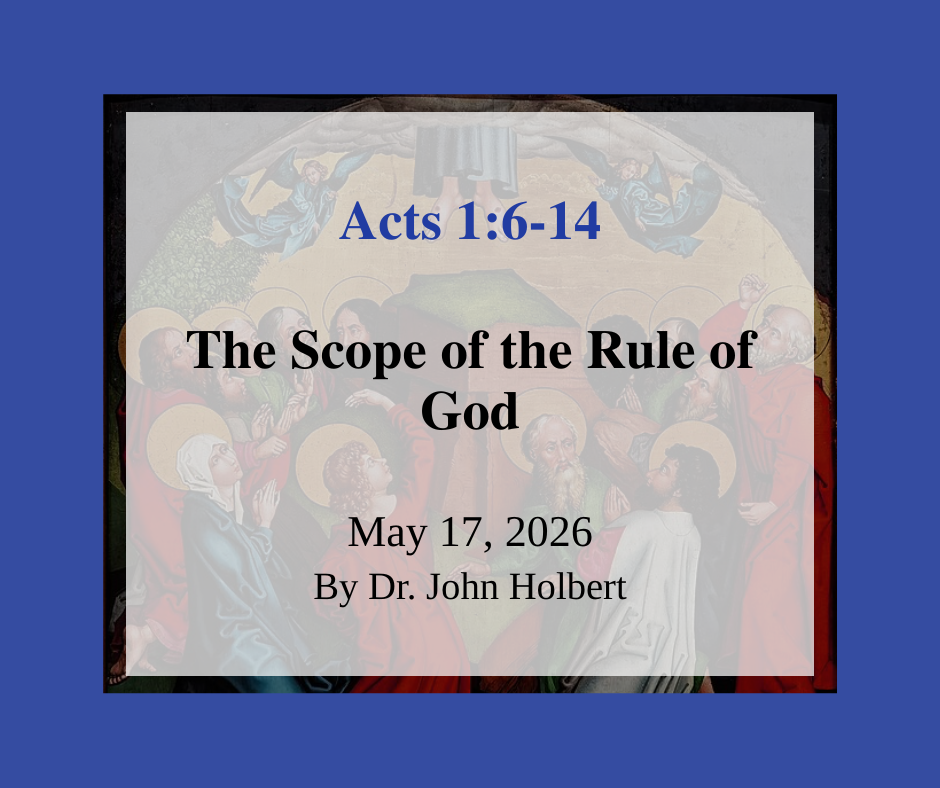
To cement the point against idle speculation, Luke then presents the scene of Jesus’ ascension into heaven, rising into the sky into a cloud. All those assembled are transfixed by this awesome sight, seemingly frozen in both terror and wonder. Suddenly, “two men in white clothing stood near them” (Acts 1:10—see Luke 24:4 and the women at the tomb), who admonish the men of Galilee: “Why do you stand looking into heaven?” (Acts 1:11). After the earlier ignorant question about Israelite restoration, I can only hear this question with a wry sense of humor. You fools ask the wrong questions, and you stand about gazing into the sky. There is work to be done, so get after it!
And finally, they do. They head back to Jerusalem from the mount of Olives and go to “the upper room” (Acts 1:13). Though Luke here uses two different Greek words for “upper room” (anagaion in Luke 22:12, and hyperoon here), he may well have in mind that same upper room where the last supper was held. Once there, the disciples turn to the task of replacing the disgraced disciple Judas in order to to make their number once again whole and complete, namely 12. Thus, the work of witness has begun. The disciples will now start their arduous work of witness, beginning with Peter in Jerusalem and ending with Paul in Rome. The gospel of the good news of Jesus, the coming rule of God on earth, will now be carried quite faithfully “to the ends of the earth.”