
Jesus IS the Messiah Long-Awaited - Reflections on Lk 2:22-40, 1st Sun after Christmas Day, Year B
by John C. Holbert on Thursday, November 12, 2026
Anyone who has read the Gospels with any seriousness and with an open mind knows full well that they are not histories of Jesus, not biographies of his life and ministry, not unbiased accounts of his words and actions. In reality, each Gospel is propaganda, not in the sense of disinformation or rumors, but in the way of promotion and public relations. Each Gospel writer has his own agenda, though the bottom line for each is to answer the central question of the early church, indeed the central question of any Christian community through the ages: who exactly is this Jesus? Each of the four in our New Testament of course have their specific emphases. For Mark, the expectations of the reader are subjected to a constant ironic twist concerning who they imagine Jesus to be; like the disciples, with whom the readers are to identify, they are regularly wrong and fail miserably to act in the ways Jesus calls them to act. For John, Jesus is nothing less than the pre-existent Word of God, who was alive before the creation of the world, and who represents God in the flesh for all. Clearly very distinct goals, but both provided answers to the key question about the identity of the rabbi from Nazareth.
Luke answers the question, too, but phrases his answer through the drama of various early scenes in his panoramic narrative. Joseph and Mary follow to the letter the demands placed on them by Jewish law with respect to their first-born child. On the 8th day he is circumcised and is named. That name is Jesus, from the Hebrew word for “salvation.” Then they take Jesus to the very heart of Judaism, the temple in Jerusalem, and proceed with the rites of purification after childbirth (Lev.12:2-5) and the presentation of the first-born to be dedicated to God, as especially described in Ex.13:2, thus making a neat connection between the liberation from Egypt and this new act of liberation from God.
They go on to offer sacrifice, again according to what is written in Torah, “a pair of turtledoves or two young pigeons” (Luke 2:24, in accordance with Lev.12:6). In Leviticus the woman is to offer a year-old lamb, but if she is poor (Lev.12:8) she may make a far cheaper sacrifice which Mary does. Luke does not want us to forget that this couple is poor; he will in his Gospel make much of the important distinctions between rich and poor, and we will see in his “sermon on the plain” that the “poor are blessed,” contrary to Matthew’s claim in his sermon on the mount that it is the “poor in spirit” who are blessed.
Then Luke pictures a meeting with a righteous and pious Simeon, who long awaited the “comfort for Israel.” That is to say, the old Simeon has waited for ages for a sign that God has comforted or brought consolation to Israel. This word, paraklesis, is used by Luke also at 6:24 to announce that the rich have already received their “consolation” through their wealth, and at 16:25 when he says to the rich man in agony in the flames of the afterlife that the poor man, Lazarus, who lay at his gates in life has now found “comfort” in the lap of Abraham, while the rich man already has received comfort in life through his wealth. Thus does Luke make this rich man an example of his more general comments during Jesus’s series of aphorisms on the plain.
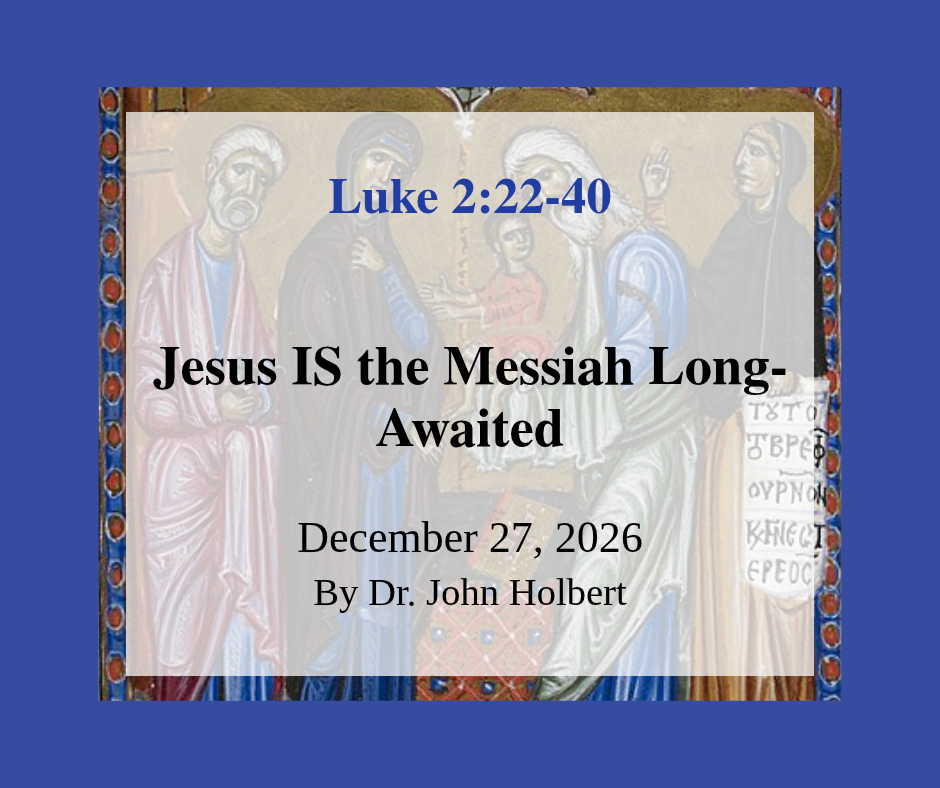
Simeon now awaits God’s consolation and wonderfully receives it. The Holy Spirit had promised him that he “would not die before seeing the Lord’s Messiah” (Luke 2:26). When he comes onto the temple grounds, he witnesses the couple performing the “customary legal obligations” (Luke 2:27). Simeon takes the child into his arms, and like Mary in the Magnificat of the previous chapter, sings a short acclamation, proclaiming that his expectations for consolation/comfort have been fulfilled in this child. “Now, Master, release your servant in peace, according to your word, for my eyes have seen the salvation you have prepared in the sight of all peoples: a light for revelation to the Gentiles, and a glory for your people Israel” (Luke 2:29-32). In this brief oracle—for Simeon is surely a prophet—Luke summarizes much of his story. Jesus is Messiah, both for Gentiles (see the great tale of Cornelius and Peter in the Book of the Acts) and for Israel—he is without doubt the Messiah of Israel.
But Simeon has a prophetic warning, too. “Behold, this child is destined to cause the fall and the rise of many within Israel, and to be a sign that is disputed—yes, and a sword will cut through your very life—so that the calculations of many hearts will be revealed” (Luke 2:34-35). This is a dark warning indeed, and of course comes true as some Jews accept this Messiah and some do not, while his mother will witness his terrible death, a death that will reveal all manner of “calculations” of those who have actively opposed the ministry of Jesus. Luke again exposes just how the story he tells will play out, both positively and negatively for Israel and for the Gentiles.
And finally in the tale, we meet Anna, called quite directly “a prophetess, daughter of Phanuel of the tribe of Aser” (Luke 2:36). She is an extraordinary figure for Luke, is very old, having lived “seven years with her husband after marriage, and as a widow some eighty-four years” (Luke 2:36-37). This makes her the near-incredible age of well over one hundred, and, perhaps hyperbolically, Luke claims that “she never left the temple grounds, but worshipped day and night with fasting and prayer” (Luke 2:37). It is true that Herod’s vast temple grounds comprised many acres of buildings and open spaces, but never to leave it is astonishing, making Anna out to be particularly pious and faithful to God. She, too, like Simeon, witnessed the couple attending to the demands of the Torah with their child, and as a result, “offered up praises to God” (Luke 2:38). In addition, “she kept speaking about him to all those awaiting a liberation for Jerusalem” (Luke 2:38). Luke again points to the future of his story. After Jesus’s resurrection, two despondent disciples trudge their way to the village of Emmaus, sighing that they had “hoped that this one would bring liberation (“redeem” NRSV —the same Greek word) for Israel” (Luke 24:21). Of course, according to Luke this one is precisely the one who has redeemed Israel, however many, both Jew and Gentile, who simply cannot believe it.
In Luke’s narrative account, the Messiah comes from within a typical Jewish family, and a poor family at that, fully given to the traditions of Israel, a deeply pious and expectant “people of God.” Nevertheless, this poor child, born in a barn or open space in the out-of-the-way village of Bethlehem, circumcised, and presented in the temple in Jerusalem, is heralded by both Simeon, the expectant Jew, and by Anna, the aged prophet, as the glory of Israel, the light to the Gentiles, the Messiah of God. These unforgettable tales are Luke’s way of telling his readers that Jesus is the Messiah, and as his story plays out in its detail, we will see just how this Messiah will be witnessed, rejected by many, loved by a few, and finally murdered by those who could not imagine how this person could ever be seen as the Messiah of Israel. Luke’s great drama will leave us with our own question: if Jesus is really God’s Messiah, then what are we to do in response to that claim?